Garden maintenance access issues for flats Croydon

If you live in a flat in Croydon, you already know that garden care is rarely as simple as opening the back gate and getting on with it. Shared entrances, locked side passages, awkward stairwells, tight courtyard spaces and neighbours who are trying to get out with shopping bags all create friction. That is exactly why garden maintenance access issues for flats Croydon need a practical, real-world approach rather than a one-size-fits-all plan.
This guide breaks down the common access problems, how professional maintenance is usually organised, and what makes the whole process smoother for residents, leaseholders, managing agents and landlords. You will also find a clear checklist, a comparison table, and a few common mistakes to avoid. To be fair, most access headaches are not about gardening skill at all. They are about logistics.
Why garden maintenance access issues for flats Croydon Matters
Access affects almost every part of garden maintenance. If a gardener cannot reach the space safely, bring equipment in without hassle, or remove waste without blocking communal areas, the job becomes slower, more expensive, and sometimes impossible to finish properly. That is the honest version.
In flats, the garden may sit behind the building, below a terrace, beside a shared car park, or inside a courtyard that is only reachable through an internal hallway. Each setup has its own little complications. Some are obvious, like a padlocked gate. Others are less obvious, like residents who need advance notice because the only route crosses a shared path or narrow access road.
It matters because poor access can lead to more than inconvenience. It can cause missed appointments, damaged plants from rushed work, clipped hedges left unfinished, bins left in the wrong place, and frustration between neighbours. If the maintenance team has to improvise every time, standards tend to slip. And once standards slip, the garden starts to look tired very quickly.
For Croydon flats, where building layouts vary wildly from older converted houses to newer apartment blocks, the access plan often needs to be tailored. That is why many residents prefer to speak through a proper garden maintenance service rather than trying to organise a quick one-off visit without checking the practical details first. A little planning saves a lot of awkwardness later.
How garden maintenance access issues for flats Croydon Works
Think of access as the bridge between the garden and the service. The maintenance task itself might be simple enough: mowing a lawn, trimming a hedge, clearing leaves, tidying beds, or removing overgrowth. But before any of that happens, the team needs a usable route in and out, plus somewhere sensible to stage tools and waste.
In practice, the process usually works like this:
- The property contact explains how the garden is reached and who controls the keys, fobs, or entry codes.
- The maintenance provider checks whether equipment can pass through doorways, side passages, stairwells, lifts, or shared corridors.
- If needed, the visit is timed to avoid busy resident hours, school runs, or delivery periods.
- The team arrives with the right tools for the access conditions, not just the right tools for the garden itself.
- Waste and green material are removed in line with the agreed access route, which is often the bit people forget to plan. Funny how that happens every time.
For some flats, a light-touch visit is enough: hand tools, compact equipment, and a small clearance load. For others, the maintenance is better done in stages. For example, a hedge trim one week and a clearance visit another week can be easier than forcing everything into a single slot when access is tight.
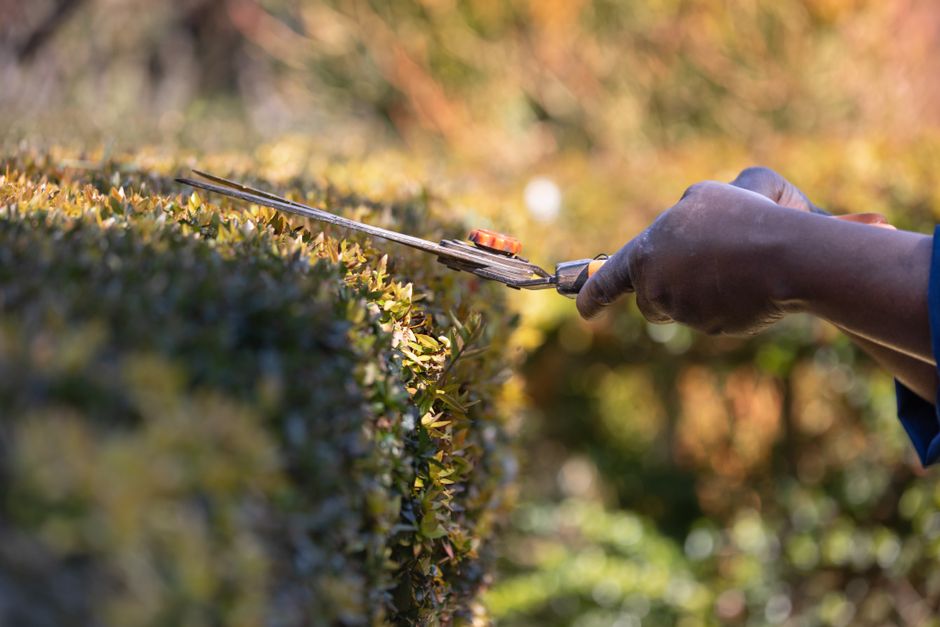
If the site needs more than routine tidying, it can help to combine maintenance with related services such as garden clearance, lawn mowing, or hedge trimming. The value is not just convenience. It is getting the right type of work matched to the way the building actually functions.
Key Benefits and Practical Advantages
When access is handled well, the garden benefits immediately. So do residents, landlords, and anyone responsible for the building. The upside is broader than many people expect.
- Less disruption: Clear entry plans reduce noise, blocked paths, and confusion in shared spaces.
- Safer work: A gardener who knows the route can move tools and waste without squeezing through unsuitable gaps.
- Better finish: The team can focus on quality rather than improvising around avoidable obstacles.
- Cleaner common areas: Planning waste collection properly helps prevent mess in hallways, car parks, and entrances.
- Fewer delays: Clear instructions reduce the chance of missed appointments or repeat visits.
- Better neighbour relations: That one matters more than people admit. A tidy, well-timed visit keeps the peace.
There is also a financial angle. If access is chaotic, jobs often take longer than expected. Even where the scope of work is small, wasted time adds up. Good planning keeps the visit efficient, and in many cases that makes ongoing maintenance more practical than a constantly deferred clean-up.
And there is a visual benefit too. Flats with well-managed communal greenery often feel brighter and more cared for, especially in the darker months when a messy entrance or overgrown boundary can make the whole place feel a bit neglected. Small detail, big impression.
Who This Is For and When It Makes Sense
This topic matters to a few different people, and the access issue looks slightly different for each one.
- Leaseholders: You may want a neat shared garden but have little control over the building layout or key access.
- Managing agents: You need reliable scheduling, clear communication, and minimal disruption for residents.
- Landlords: You may be balancing cost, tenant satisfaction, and the condition of communal or private outdoor space.
- Residents' groups: You might be trying to agree a workable maintenance routine for everybody, which is never as simple as it sounds.
- Housing associations and block managers: Access planning can be essential where there are regular visits and stricter site procedures.
It makes sense to address access issues before the garden becomes overgrown. If there is already a backlog, the first visit may need more than routine maintenance. In that case, a stronger initial tidy-up via garden clearance can create a more manageable starting point, after which ongoing visits become simpler.
If the outside space is more than a patch of grass and needs reshaping, drainage-sensitive reworking, or better-defined paths, the job can drift into landscaping or even broader landscape gardening. That is worth spotting early, before people keep arranging maintenance when the real need is a modest redesign.
Step-by-Step Guidance
If you are organising maintenance for a flat, here is a sensible way to handle the access side without turning the process into a drama.
1. Map the actual access route
Start by walking the route from street to garden. Not on paper. Actually walk it. Note gates, locked doors, shared hallways, narrow sections, steps, uneven paving, and any place where equipment will need to turn or lift. You will often spot the problem in thirty seconds once you stand there.
2. Identify who controls entry
Is there a concierge, caretaker, managing agent, resident key holder, or coded lock? Make sure everyone knows who opens what and when. Missed handovers are one of the most common reasons a job gets delayed.
3. Confirm timing and noise expectations
Flat living means timing matters. Morning starts might suit the work, but not the residents on night shifts. Later afternoon can be awkward near school pickup times. A short notice window shared in advance keeps things smoother.
4. Match the tools to the access conditions
A compact lawn mower, hand shears, pruning tools, and small waste bags can be ideal for tight access. Bigger machinery is not always wrong, but it has to fit the route. There is no point bringing equipment that can do the job if it cannot get through the gate.
5. Decide where waste will go
Green waste needs a clear removal plan. If bags have to pass through shared spaces, that route should be agreed first. If possible, stage collection near the exit rather than carrying debris through common entrances more than once.
6. Agree what is included in the visit
Does the maintenance cover mowing only, or mowing plus edging, leaf collection, hedge trimming, and minor clearance? Keeping the scope clear prevents confusion when the gardener arrives and sees a bigger job than expected.
7. Review and improve after the first visit
After one maintenance round, ask what worked and what was awkward. Often the answer is a tiny adjustment: a different arrival time, a better key handover, or moving bins out of the route. Small fix, big difference.
Expert Tips for Better Results
Here is the part that tends to save the most time in the real world.
- Leave the access route clear the night before: Wheelie bins, bikes, prams and delivery boxes have a habit of gathering exactly where they should not.
- Label the entry process: A short note with the gate code, contact person, and arrival instructions avoids a lot of back-and-forth.
- Schedule work before growth gets out of hand: Overgrown areas are harder to move through, and access problems become worse once the garden itself starts blocking the route.
- Use smaller, more frequent visits when access is tight: That is often less disruptive than one large seasonal visit.
- Keep communication in writing: Even a simple email trail helps when several people are involved.
- Ask about waste handling upfront: If removal is part of the plan, make sure the route and load-out process are both realistic.
In our experience, the best flat-garden jobs are the ones where someone has spent ten minutes thinking ahead. Nothing glamorous. Just a sensible person who has already moved the locked gate key, told the neighbours, and checked whether the mower can fit through the side passage. That is the whole trick, really.
If you want a broader view of what a service can cover, it is worth reviewing a provider's services overview alongside their approach to garden maintenance. That helps you compare routine upkeep with one-off support and figure out which model suits your building.
Common Mistakes to Avoid
Most access problems are predictable. The tricky bit is that people keep making the same ones because they seem small at the start.
- Assuming access will be obvious: It usually is not. What looks straightforward to a resident can still be awkward for a team carrying tools and waste.
- Leaving keys or codes with the wrong person: A small handover failure can waste an entire visit.
- Underestimating the route for waste removal: Cutting the garden is the easy part. Getting clippings out can be the messy part.
- Booking maintenance after the garden has become heavily overgrown: By then, access may be partially blocked by the garden itself.
- Not warning neighbours: Shared living and surprise noise are not a great combination.
- Mixing up maintenance with redesign: If the area needs structural changes, regular upkeep alone may not solve it.
A small but common oversight is forgetting seasonal conditions. Wet leaves in autumn, muddy paths in winter, or a humid spell in late summer can make tight routes slipier and slower to use. Nothing dramatic, just enough to trip a rushed plan. And nobody wants a gardener balancing a bag of cuttings like a circus act.
Tools, Resources and Recommendations
You do not need a huge kit for flat access work. In fact, smaller and more adaptable is often better.
| Access challenge | Useful approach | Why it helps |
|---|---|---|
| Narrow passage or side gate | Compact hand tools and smaller equipment | Easier movement and less risk of blockage |
| Shared hallway or entrance | Pre-agreed entry time and short work window | Reduces disruption to residents |
| Waste removal through common areas | Bagged waste staged near exit point | Minimises carry distance and mess |
| Overgrown access route | Initial clearance before routine maintenance | Restores safe passage for future visits |
| Mixed-use communal garden | Scheduled visits with resident notice | Improves coordination and neighbour comfort |
As a general recommendation, start with the simplest workable setup. If the garden is small and the access is awkward, a full redesign of the maintenance approach may not be necessary. A modest plan, repeated reliably, often works better than a big ambitious one-off.
For properties that need periodic tidying beyond mowing and hedge work, combining routine visits with occasional clearance can keep everything under control. You can also review practical pages like lawn mowing and hedge trimming to understand how those tasks fit into a building-wide schedule.
Law, Compliance, Standards, or Best Practice
Garden maintenance in flats is usually less about formal regulation and more about responsible practice, safe site access, and clear communication. That said, there are still important standards to keep in mind.
In the UK, anyone working in shared residential spaces should be mindful of health and safety, safe manual handling, trip hazards, and the need to avoid obstructing communal access routes. If equipment, waste, or sharp tools are being moved through shared spaces, the process should be planned carefully. Nothing fancy, just sensible risk awareness.
It is also wise to consider building rules, lease conditions, and any instructions from the managing agent or landlord. Those details vary by property, so the best approach is to confirm them before work begins rather than discovering them halfway through. A good provider should be comfortable working within those boundaries and should explain how they handle site safety and insurance expectations.
For peace of mind, it helps to check a provider's approach to health and safety, insurance and safety, and accessibility. Those pages are useful because they show how seriously the business treats shared access, inclusive service, and risk management. If you are comparing providers, that trust layer matters more than people think.
Waste handling and sustainability are another practical consideration. Green waste should be managed responsibly, and if a provider makes a point of reducing landfill where possible, that is a good sign. You can also look at recycling and sustainability to see how environmental care fits into the service model.
Options, Methods, or Comparison Table
There are a few realistic ways to handle access for flat-based garden maintenance. The best option depends on the route, the size of the garden, and how many people are involved in the building.
| Method | Best for | Pros | Limitations |
|---|---|---|---|
| Single scheduled visit | Small, easy-access gardens | Simple to organise, low admin | Can be awkward if residents are busy or access is shared |
| Regular maintenance plan | Communal spaces that need ongoing upkeep | Keeps growth under control, fewer surprises | Needs reliable entry arrangements |
| Initial clearance then maintenance | Overgrown or neglected gardens | Resets the space and improves access | Usually takes more effort at the start |
| Split works over multiple visits | Sites with tight access or shared routes | Less disruption, easier logistics | May feel slower, though often works better |
For many Croydon flat gardens, the split approach is the most realistic. A first visit to clear the route, a second to complete routine work, and then lighter follow-up visits. It sounds a bit old-school, but it works.
Case Study or Real-World Example
Here is a typical scenario. A small block of flats has a rear communal garden reached through a side passage that is barely wide enough for a person carrying a bag of clippings, let alone larger kit. The garden itself is not huge, but it has become unruly. The hedge has crept into the path, the lawn is patchy, and the bins have been left near the only gate.
At first glance, someone might think the job is straightforward. Cut the grass, trim the hedge, tidy the beds, done. But the real challenge is access. The route needs to be cleared first, residents need notice, and waste must be removed without blocking the entrance. If a gardener turns up with oversized machinery, they will spend half the appointment trying to manoeuvre instead of actually working.
The smarter solution is to do the job in stages. First, a lighter clearance to open up the route. Then a maintenance visit using compact tools. After that, a regular schedule is agreed so the garden never gets to the point where access becomes a problem again. Nothing dramatic, just calm and methodical. And yes, the building finally stops looking like it has been left to fend for itself.
That is the real lesson: access problems are often solved by sequencing, not force.
Practical Checklist
Use this checklist before the next garden visit for a flat in Croydon.
- Identify every access point from street to garden.
- Confirm who holds keys, fobs, or codes.
- Check whether tools and waste can pass safely through the route.
- Remove bins, bikes, and clutter from the access path.
- Warn residents about the visit time and expected noise.
- Confirm whether the job is routine maintenance, clearance, or both.
- Agree where green waste will be staged and collected.
- Make sure the provider understands any site rules or building restrictions.
- Check safety, insurance, and accessibility information before booking.
- Review the route after the first visit and tighten the process if needed.
Expert summary: For flats, good garden maintenance is rarely just about plants. It is about access, timing, waste movement, and communication. Get those four things right and the rest gets much easier.
Get a free quote today and see how much you can save.
Conclusion
Garden maintenance access issues for flats Croydon are manageable, but only if you treat access as part of the job rather than an annoying extra. Shared routes, locked entrances and limited space are normal in flat living, not a special exception. The good news is that with a clear plan, the right tools, and sensible communication, even awkward gardens can be kept tidy without creating chaos for residents.
Whether you are arranging routine upkeep, a one-off clearance, or a longer-term maintenance plan, the smartest move is to work with the building rather than against it. That means confirming the route, setting expectations early, and choosing the service approach that fits the property. Simple, really. Not always easy, but simple.
And when it is done properly, you notice the difference straight away: cleaner paths, calmer neighbours, healthier planting, and a space that feels cared for rather than neglected. That kind of order has a quiet charm to it.
Frequently Asked Questions
What are the most common garden access problems for flats in Croydon?
The usual problems are locked gates, narrow side passages, shared hallways, awkward stair access, and bins or bikes blocking the route. Waste removal can be just as tricky as the maintenance itself.
How do gardeners get into a communal garden in a flat block?
Usually through a key, fob, code, concierge, or a pre-arranged meeting with the resident or managing agent. Clear instructions matter because a vague "the back way" can mean three different things in one building.
Can garden maintenance be done through a hallway or shared entrance?
Yes, but only if it is safe, permitted, and practical. The route needs to be suitable for tools and waste, and residents should be warned in advance so shared spaces are not disrupted unexpectedly.
Is overgrown access part of garden maintenance or a clearance job?
If growth is blocking the route or the garden has become heavily neglected, the work often starts as clearance before regular maintenance can take over. In many cases, both are needed in sequence.
What should I tell a gardener before they visit a flat garden?
Tell them how to get in, who to contact, where the garden is accessed from, whether there are stairs or narrow passages, and whether waste can be removed through the same route. The more specific you are, the smoother the job.
How often should communal gardens in flats be maintained?
That depends on the size of the space, how quickly it grows, and how often residents use it. Smaller, shared gardens usually work best with regular lighter visits rather than waiting for everything to become overgrown.
Do I need permission from the landlord or managing agent first?
In many buildings, yes, or at least agreement on access and scheduling. Leasehold and managed properties often have site rules, so it is wise to check before booking any work.
What if the access route is too tight for larger equipment?
Then the job may need compact tools, a different work method, or multiple smaller visits. Sometimes the solution is simply to avoid forcing machinery through a route it was never meant to use.
Can waste be removed without disturbing residents?
Often yes, if the route and timing are planned well. Staging green waste near the exit and avoiding busy hours can reduce disruption quite a lot.
How do I know whether I need garden maintenance or landscaping?
If the space mainly needs tidying, mowing, trimming, and general upkeep, maintenance is probably enough. If the layout itself is causing ongoing problems or the garden needs a new structure, then landscaping may be the better fit.
What makes access planning so important for flats specifically?
Because flat gardens are usually shared spaces. That means more people, more movement, and more chance of a blocked route or accidental disruption. A little planning keeps everyone happier.
Where can I find more information about Croydon garden services?
You can explore the provider's services overview, along with pages on garden maintenance, garden clearance, and related services to see what fits your property best.